Technological Advancements
Our 5 Prototypes & Deployed Use Cases
Interactive specifications of our experimental hardware, robotic assistants, and AR interfaces, along with their validation scenarios on construction sites.
Select Prototype Profile
P1
Autonomous Mobile Operator
P2
AR Companion System
P3
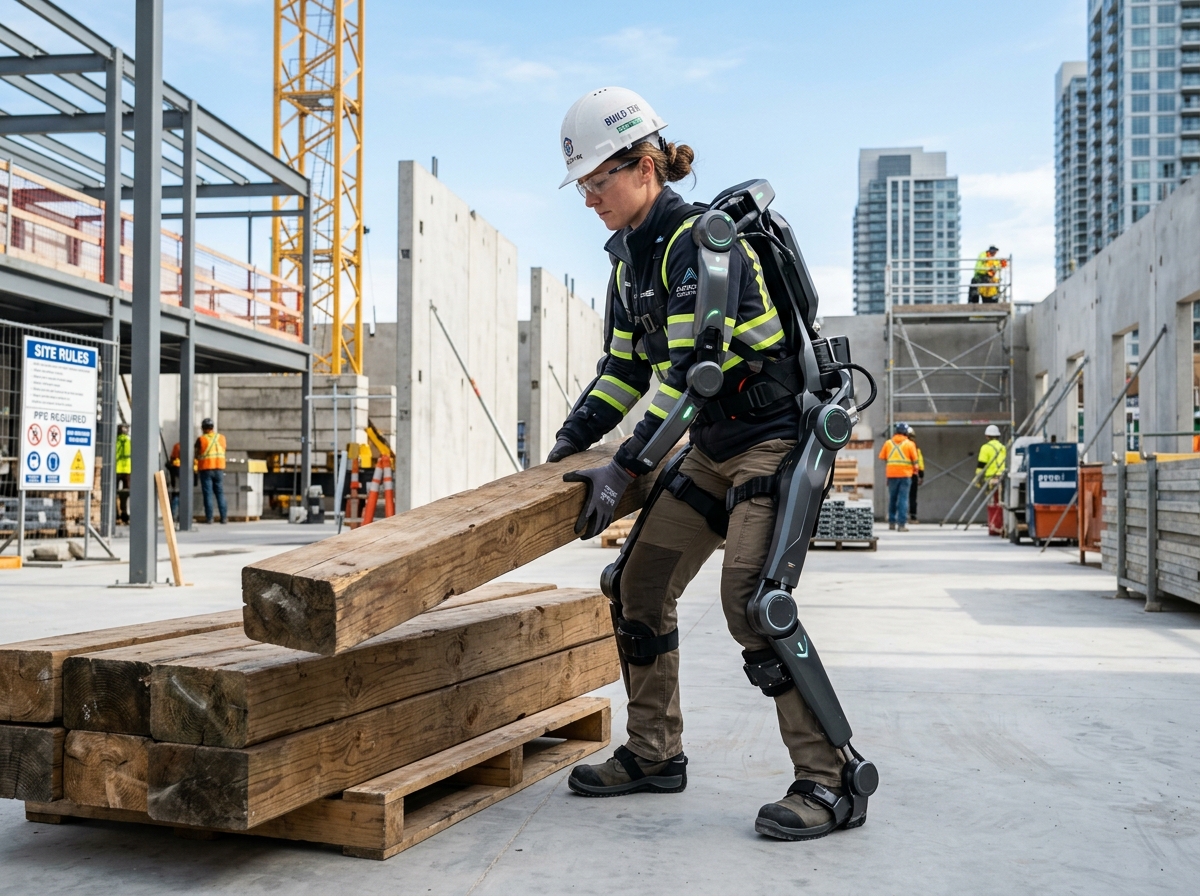
Enhanced Exoskeletons
P4
3D Printing & Additive Manufacturing
P5
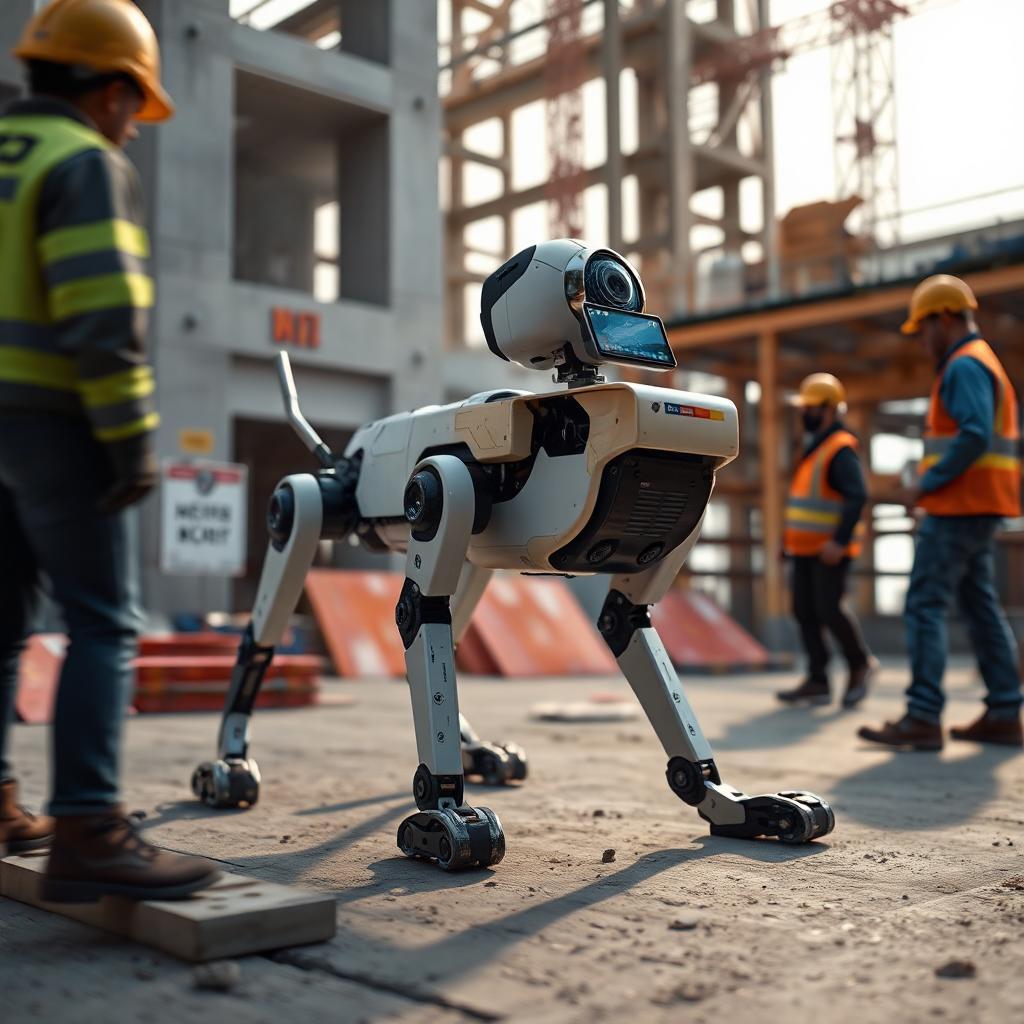
Autonomous Mobile Supervisor
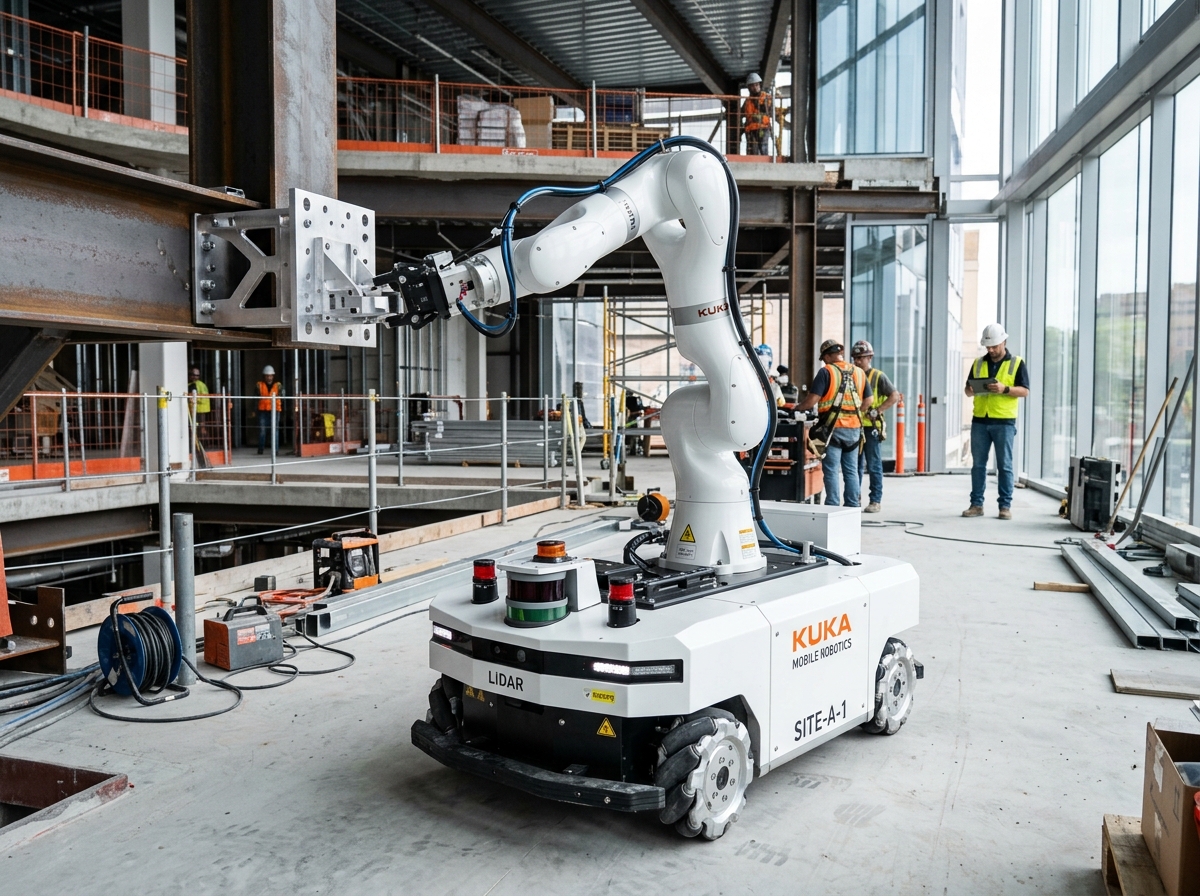
Autonomous Mobile Operator
A cognitive mobile manipulator designed to perform heavy and repetitive installation tasks in dynamic work areas alongside a mixed human-robot workforce.
User Value
- Reduces manual operator workload in tedious tasks (drilling, screwing, panel handling).
- Secures flawless quality with digital verification logs of every action.
Key Technological Capabilities
- 3D spatial perception & environment mapping
- Dynamic obstacle avoidance and path planning
- Safe reactive physical control during human contact
- Multi-agent task synchronization
Expected Site Outcomes
- Reduction of assembly and installation errors
- Significant reduction of work-related physical strain
- Lowered incidence rate of workplace hazards
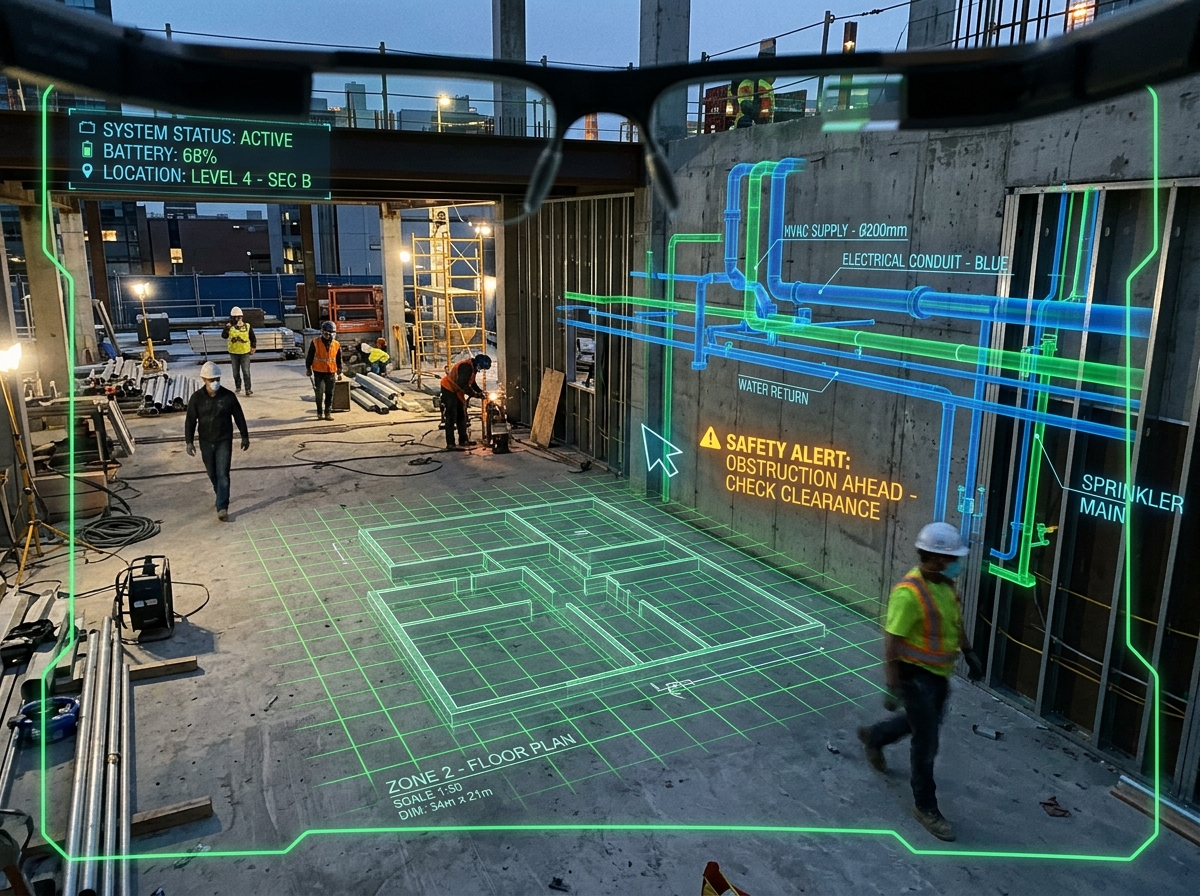
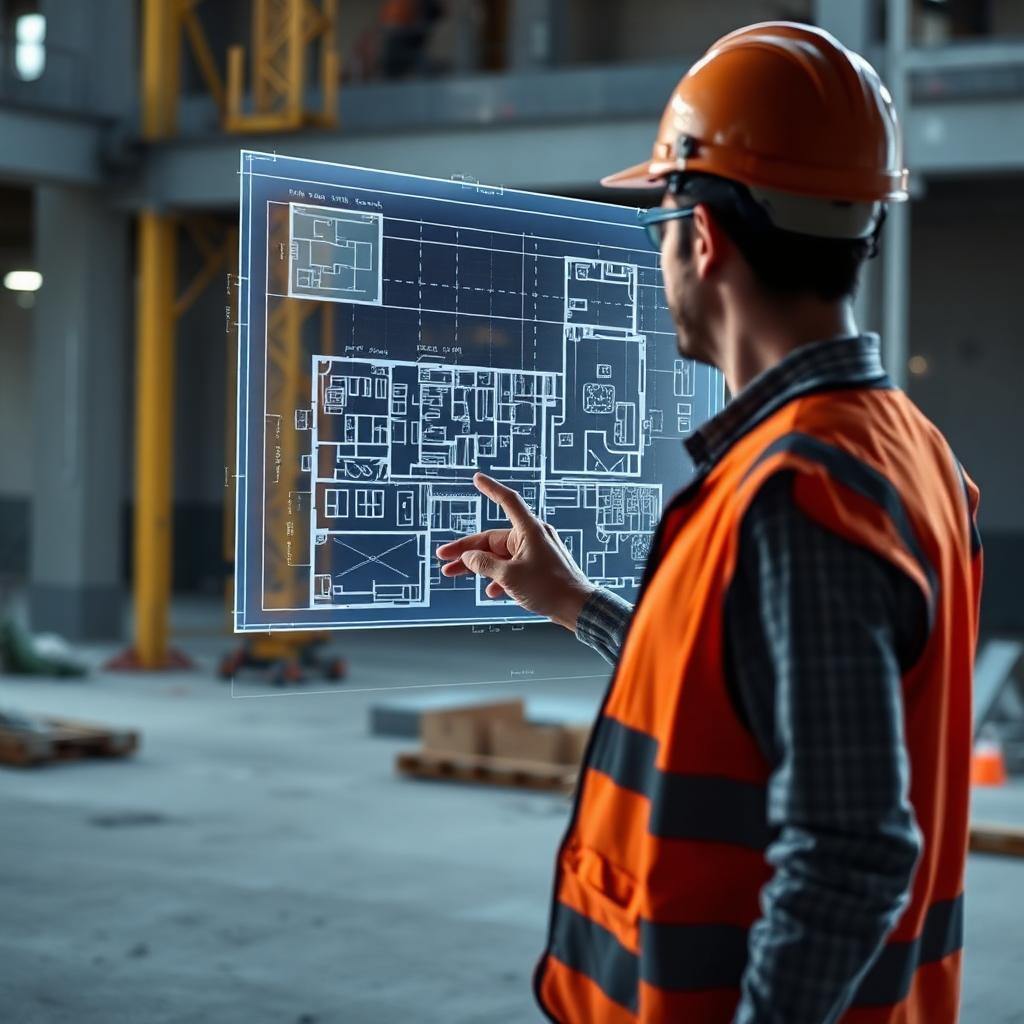
AR Companion System
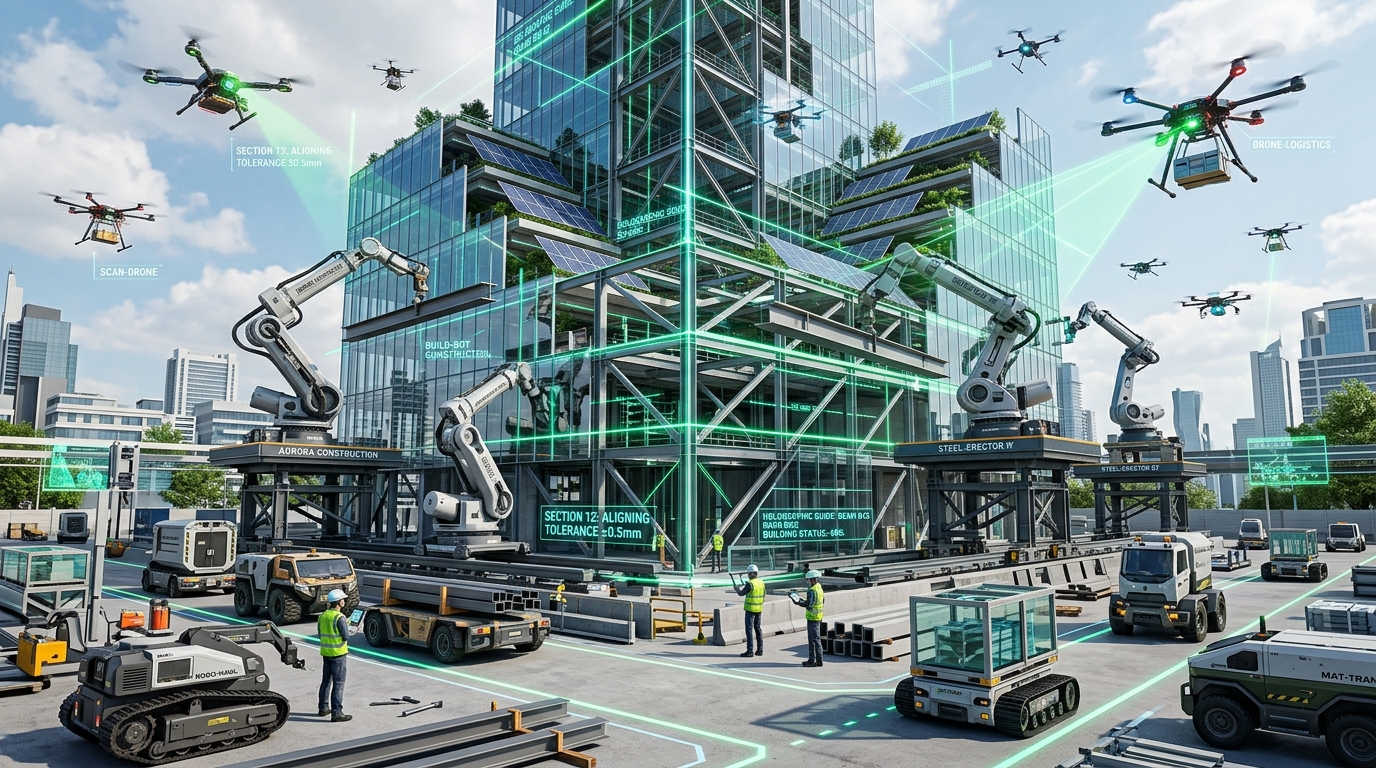
Enables operators to see behind-the-wall layouts and precise marking locations. Ensures immediate quality control and on-site plan verification.
User Value
- Millimeter-level alignment between digital BIM data and physical structures
- Proactive safety boundaries and real-time operator alerts
- Virtual training platform with direct feedback loops
Key Technological Capabilities
- 3D routing, trajectory, and assembly-step projections
- Intuitive gesture, touch, and vocal user interface
- Real-time quality control and plan verification
Expected Site Outcomes
- Drastic reduction of alignment and construction errors
- Accelerated onboarding and work task efficiency
- Enhanced spatial situational awareness for builders
Enhanced Exoskeletons
Active power-support robotic exoskeleton focused on offloading lower back and torso compression for heavy lifting, integrating active AI-driven intent-based control.
User Value
- Minimizes structural fatigue and injuries related to lifting heavy panels or building blocks.
- Tailors exact supportive assistance levels based on biometric readings in real time.
Key Technological Capabilities
- Multi-modal biological sensor fusion (IMU, muscle EMG)
- Predictive intent-based support algorithms
- Ultra-light, ergonomic wearable form factor
- Continuous data collection for ergonomic evaluation
Expected Site Outcomes
- Substantial reduction in muscle strain and spinal load
- Increased endurance and energy reserve of operators
- Significantly improved long-term musculoskeletal health
3D Printing & Additive Manufacturing Smart Assistant
An advanced digital fabrication assistant integrated with BIM models for on-site or off-site 3D printing of custom structural elements and architectural detailing.
User Value
- Produces optimized construction parts on-demand, bypassing supply chain delays.
- Directly uses recycled concrete or secondary raw aggregates for circularity.
Key Technological Capabilities
- Automated printing-path generation from Digital Twins
- Continuous optical and sensory in-line quality feedback
- Adaptable extrusion for circular recycled materials
- Generative geometric shape optimization
Expected Site Outcomes
- Slashed fabrication lead times for bespoke components
- Zero material waste through precise additive extrusion
- Flexible architectural customizability
Autonomous Mobile Supervisor
Feeds visual and telemetry logs directly into the cloud-hosted Digital Twin. Ensures continuous automated audits of site health, safety, and physical compliance.
User Value
- 360° high-fidelity volumetric spatial scanning
- Real-time progress vs plan tracking algorithms
- Operator biometric health and fatigue analysis
Key Technological Capabilities
- Holographic layout printing onto construction floors
- Continuous automated audits of site health and safety
- Early warning trigger for project delays and construction clashes
Expected Site Outcomes
- Unparalleled site situational awareness
- Early warning trigger for project delays and construction clashes
- Immediate detection of physical fatigue in mixed crews
Integration Matrix
Validation Use Cases
How the individual prototypes collaborate in high-stress, real-world construction environments to deliver compound value.
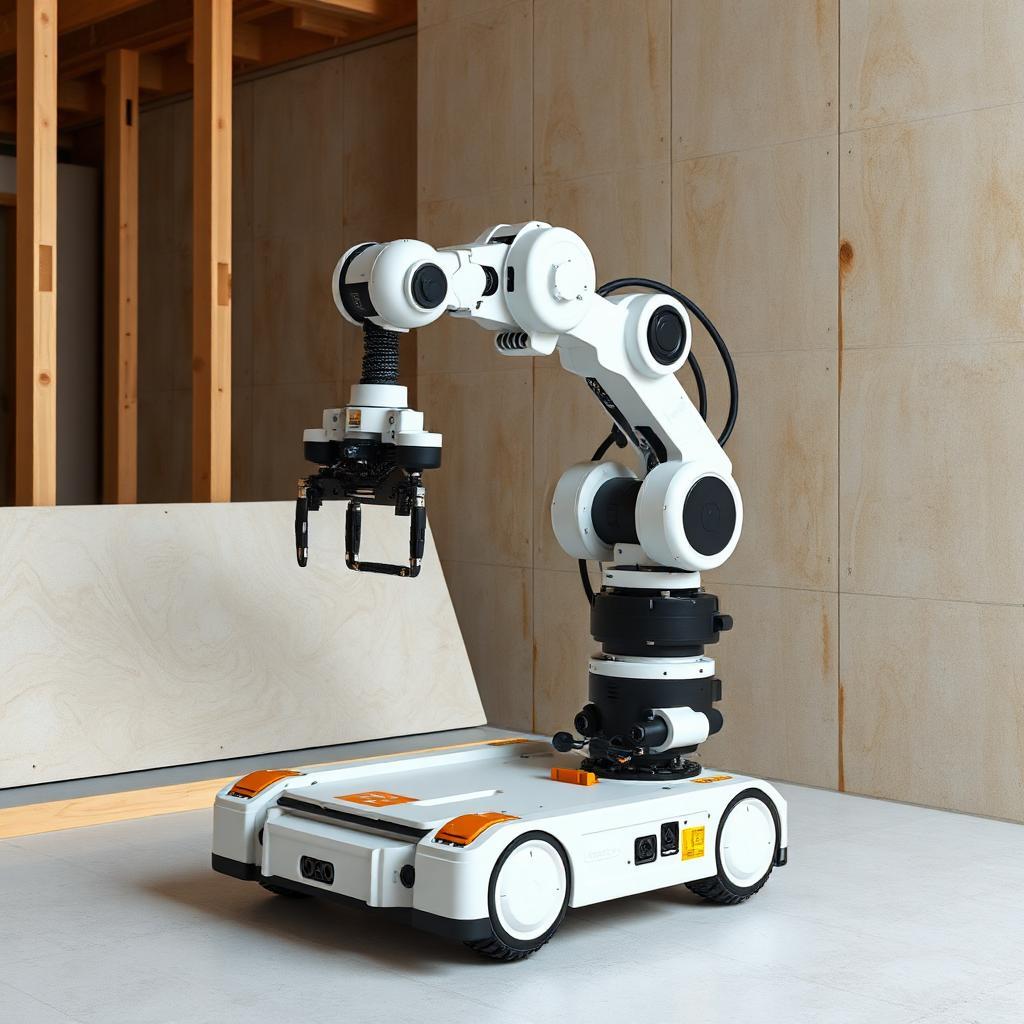
Validation Case UC1
Autonomous Mobile Operator Collaboration — Validating safe and collaborative task sharing between heavy-duty mobile robots (P1), ergonomic exoskeletons (P3), and supervisory systems (P5) on active framing, plastering, and drywall assembly lines.
Validation Scenarios & Procedures
- 01 Coordinated assembly of structural steel frame sections
- 02 Semi-automated collaborative wall plastering & precise painting
- 03 Autonomous drywall placement, positioning, and fastening logs
Cooperating Fleet Prototypes
P1 IKERLAN
P3 VUB
P5 HUPI
Validation Case UC2
Empowered Workers in Construction — Enhancing human craftsmanship with state-of-the-art visual assistance overlaying plans (P2) and localized additive manufacturing of tailored structures (P4) to streamline custom building alterations.
Validation Scenarios & Procedures
- 01 On-demand custom component 3D printing in active site cabins
- 02 Augmented reality guided positioning of structural anchors and bespoke prefabricated elements
Cooperating Fleet Prototypes
P2 FM
P4 INEGI
Validation Case UC3
Smart Assistants for Digitalized Construction — Bridging the gap between design office planners and physical execution through continuous digital synchronization, comparing live scanned telemetry (P5) against spatial models (P2).
Validation Scenarios & Procedures
- 01 Continuous floor layout marking and dimensional verification in tight technical rooms
- 02 Real-time Digital Twin update of HVAC, plumbing, and structural deviations
Cooperating Fleet Prototypes
P2 FM
P5 HUPI